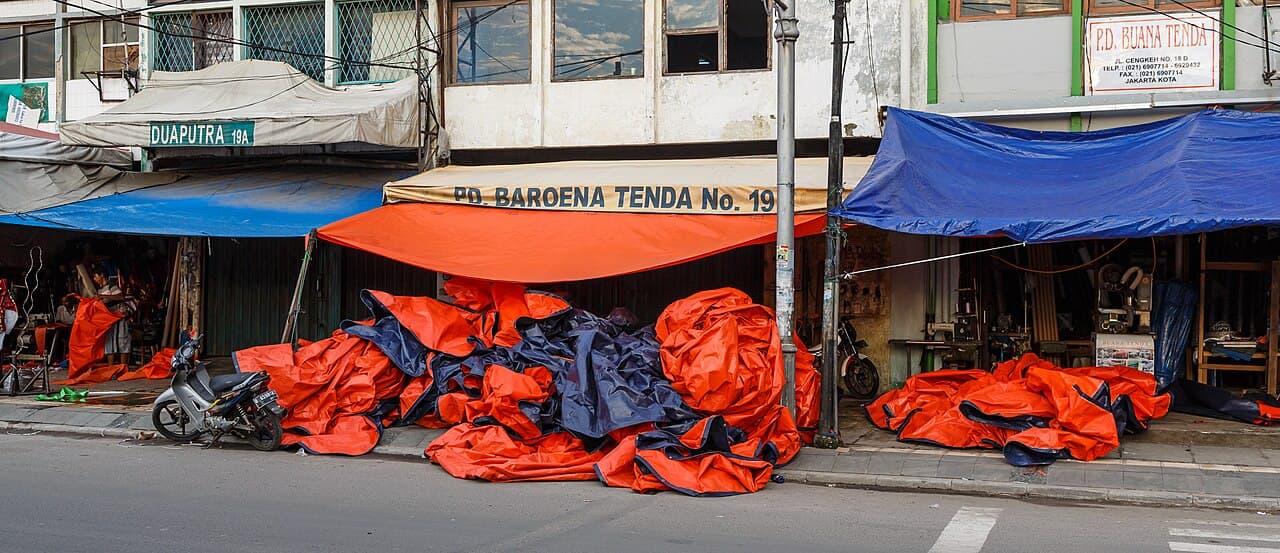
Jakarta's maritime story is still visible across working and protected landscapes. Sunda Kelapa remains an operating port with inter-island shipping and traditional sailing vessels. Museum Bahari and Menara Syahbandar preserve institutional memory nearby. Farther into Jakarta Bay, inhabited islands and the Thousand Islands Marine National Park show that the city's territory includes communities and ecosystems as well as shoreline infrastructure. Reading these places together replaces a simple harbor postcard with a longer story of trade, navigation, labor, conservation and urban change.
At a glance
Start here
- Begin with Sunda Kelapa as a working port, not a film set.
- Use Museum Bahari and Menara Syahbandar to interpret maritime systems.
- Distinguish Jakarta Bay, the island regency and the marine national park.
- Plan port and island visits separately through current official information.
01
See the working port before the postcard
Pelindo describes Sunda Kelapa as a port with a long role in regional and international exchange that still handles inter-island cargo. Traditional phinisi or Bugis schooners remain part of its present operations. The key word is operations. Boats, workers, vehicles, cargo and controlled areas exist for transport and trade, even when the scene also attracts visitors.
Stay within current public areas and follow port staff. Do not climb equipment, enter a vessel, cross a barrier or direct workers for a photograph. Historic claims should remain tied to Pelindo's own account and museum interpretation; the view alone cannot tell you which ship carries which cargo or where it will sail. Confirm access with the port because operational and tourism arrangements can change.
- Treat signs and port staff as the authority on access.
- Keep working lanes clear.
- Do not infer a ship's route or cargo from appearance.
02
Let Museum Bahari interpret the waterfront
Jakarta's official museum page says Museum Bahari focuses on Indonesian maritime and fishing collections and occupies historic warehouse buildings opposite Sunda Kelapa. That position makes it an interpretive hinge between objects inside and activity outside. Boats, navigation tools, fishing material and port history can give names and systems to what the waterfront view cannot explain by itself.
Visit the museum before or after the port according to current access, but give it its own attention. Read which objects are original, models or reproductions. Warehouses also have a layered colonial history, so avoid describing them only as atmospheric. Check the Cultural Service for open buildings, exhibitions and entry details; a city profile establishes the collection, not guaranteed conditions for a future date.
- Use labels to connect objects with maritime work.
- Distinguish models and reproductions from original vessels or tools.
- Verify current museum access through its manager.
03
Read Menara Syahbandar as infrastructure
The North Jakarta tourism office identifies Menara Syahbandar as the former point for observing port activity near Museum Bahari. That function matters more than the tower's visual charm. A harbormaster's view relates to regulation, arrivals, departures and the administration of movement. It reveals that a port is a controlled system rather than an open shoreline.
Any tower access, stair condition or view must be confirmed on the day. Do not promise a climb from a historical description, and do not describe the view as accessible to everyone without current evidence. If the tower is closed, its exterior location can still help map the relationship among warehouses, port and surrounding settlement. Follow museum staff and barriers rather than searching for an unofficial entrance.
- Interpret the tower through its monitoring function.
- Confirm interior access and conditions directly.
- Use the exterior relationship when entry is unavailable.
04
Follow connections rather than a single origin
Pelindo's history places Sunda Kelapa within routes involving traders from across Asia and the Middle East and goods moving between islands and wider markets. The port story is therefore one of connections, not an isolated founding moment. Commodities, ships, finance, labor and political control changed across centuries, and nearby Kota Tua institutions preserve different pieces of those systems.
A careful account avoids making one date explain the whole city. Use Museum Bank Indonesia for the financial layer, Jakarta History Museum for urban government and Museum Bahari for maritime work. These institutions may interpret overlapping periods differently because their collections have different purposes. The productive question is what each source can establish, where narratives overlap and which communities remain less visible.
- Track routes, goods and institutions together.
- Avoid a single-date origin story for Jakarta.
- Compare museum purposes when accounts differ.
05
See how the city continues into the bay
Jakarta does not end at the seawall. The Thousand Islands form an administrative regency with inhabited islands, while official tourism information also identifies resorts and heritage sites. This is a lived geography of communities, public administration and transport. It should not be reduced to an empty beach escape from the real city.
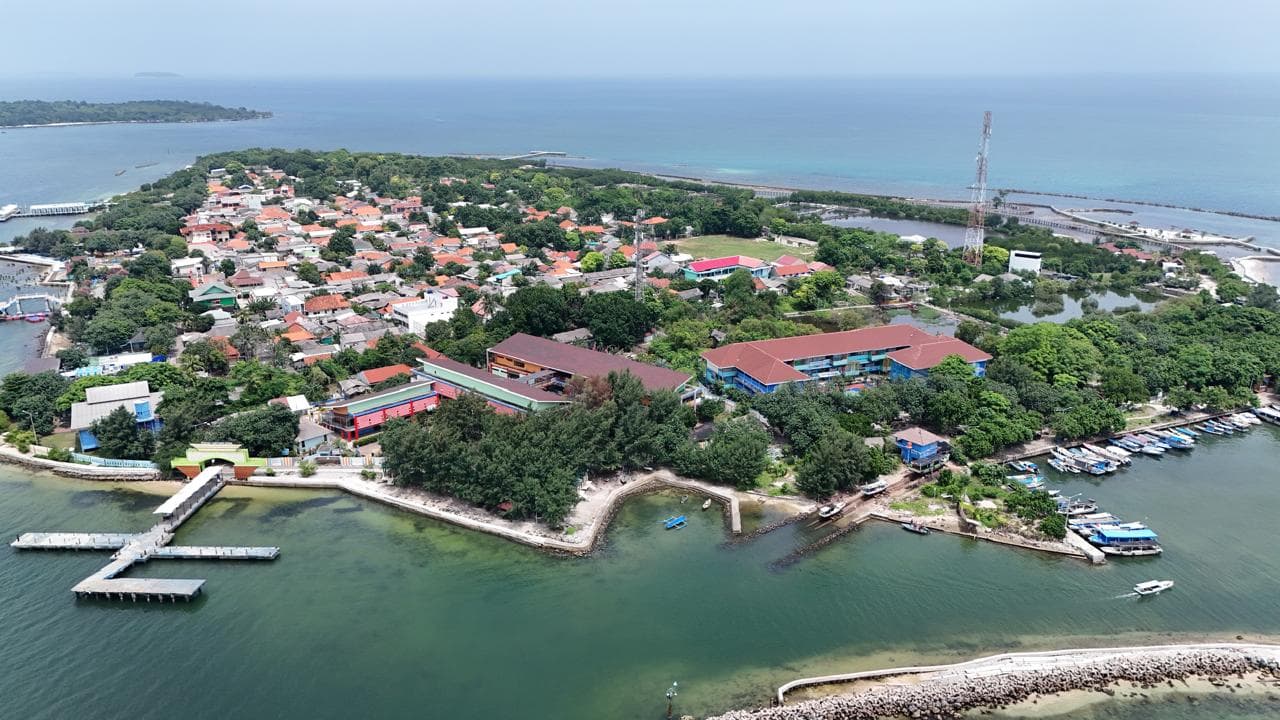
An island visit adds contemporary questions about water, waste, livelihoods and connections to the mainland, but those details must be learned from the named island and host. Facilities vary, and a claim about one island cannot be applied to the whole regency. The article photograph shows Pulau Untung Jawa, an inhabited island context; it does not depict Sunda Kelapa, Museum Bahari or every Thousand Islands destination.
- Name the island and whether it is inhabited.
- Ask local hosts about current infrastructure and rules.
- Caption the Pulau Untung Jawa photograph accurately.
06
Let the marine national park change the story
The Thousand Islands Marine National Park adds ecological limits to a narrative dominated by trade and urban growth. The park authority identifies a zoned conservation area, while its management material highlights coral reefs, mangroves, seagrass and protected species. Tourism is one allowed use within a system whose purpose also includes research, education and conservation.
That means a boat trip is never simply movement across vacant water. Routes, anchors, snorkeling, wildlife observation and waste can affect protected systems. Visitors should ask whether an activity enters the park, which rules apply and who has authority at the site. Do not touch coral, remove marine life or enter a closed restoration area. Current park instructions take priority over a package description.
- Ask whether the activity enters a national-park zone.
- Follow rangers and site managers.
- Keep anchors, fins, hands and waste away from sensitive habitat.
07
Plan two separate maritime encounters
The port-museum cluster and an island journey belong in separate plans. A north Jakarta heritage block can include Museum Bahari, Menara Syahbandar and a permitted view of Sunda Kelapa. An island trip needs a named destination, confirmed pier, recognized operator, return arrangement and current BMKG marine forecast. Combining them casually increases the chance of rushing both and missing an important departure.
Use the first visit to understand institutions and working infrastructure. Use the second, if conditions and permissions allow, to understand community and marine geography. The separation also keeps mutable details where they belong: port management controls operational access, museum management controls galleries, the boat operator and authorities control sailing, and the park controls protected sites. A coherent maritime story respects all four.
- Give the Sunda Kelapa cluster its own half or full day.
- Build an island day from current transport and weather information.
- Know which authority controls each decision.
Useful answers
Reader questions
Is Sunda Kelapa still a working port?
Yes. Pelindo describes ongoing inter-island cargo and traditional sailing-vessel activity. Visitors must remain in permitted areas and follow port operations rather than treating the site as an open set.
Sources: PelindoWhat does Museum Bahari add to a port visit?
Its maritime and fishing collections provide historical and material context for the ships, warehouses and systems outside. Check the museum manager for current galleries and access.
Sources: Jakarta Provincial Government; North Jakarta Tourism and Creative Economy OfficeAre the Thousand Islands entirely a national park?
Do not treat the administrative regency and the marine national park as identical. The regency includes inhabited islands and tourism areas, while protected zones have their own management and rules.
Sources: Jakarta Provincial Government; Thousand Islands Marine National Park AuthorityCan I combine Sunda Kelapa with an island departure?
Plan them separately unless a current operator explicitly confirms the logistics. An island day needs a named destination, exact pier, return, weather check and enough margin; the port-museum cluster deserves its own time.
Sources: Pelindo; BMKG; Jakarta Provincial GovernmentRead the evidence
Sources and further reading
These sources support the relevant sections above. Plans and comparisons are editorial suggestions. Check operators for current arrangements.
- Pelabuhan Sunda Kelapa ↗Pelindo · Accessed 14 September 2026
The port's historical trading connections, current cargo role and continuing traditional sailing-vessel activity.
- Museum ↗Jakarta Provincial Government · Accessed 14 September 2026
Museum Bahari's maritime and fishing collections, warehouse context and relationship to Sunda Kelapa.
- Destinasi Wisata Sunda Kelapa Jakarta Utara yang Wajib Dikunjungi: Mengenal Pesona Wisata Bahari dan Sejarah ↗North Jakarta Tourism and Creative Economy Office · Accessed 14 September 2026
The relationship among Museum Bahari, Menara Syahbandar and the working Sunda Kelapa port.
- Pengenalan Destinasi 12 Jalur Pesisir Jakarta Utara, Ajak Generasi Muda Telusuri Warisan Sejarah dan Budaya Pesisir ↗North Jakarta Tourism and Creative Economy Office · Accessed 14 September 2026
Official heritage-route grouping of Sunda Kelapa, Museum Bahari and Menara Syahbandar.
- Developing Kota Tua Jakarta as an Integrated Cultural Heritage Destination ↗Jakarta Investment Centre · Accessed 14 September 2026
The wider heritage zone, museum network and relationship between historic institutions and current public space.
- Kepulauan Seribu ↗Jakarta Provincial Government · Accessed 14 September 2026
The island regency, inhabited islands and its distinction from the national conservation area.
- Wisata Kepulauan Seribu ↗Jakarta Provincial Government · Accessed 14 September 2026
The range of inhabited, resort, heritage and recreation contexts among the islands.
- Taman Nasional Laut Kepulauan Seribu ↗Thousand Islands Marine National Park Authority · Accessed 14 September 2026
Official park identity, zoning, visitor services and conservation context.
- Rencana Pengelolaan Jangka Panjang (RPJP) Taman Nasional Kepulauan Seribu ↗Thousand Islands Marine National Park Authority · Accessed 14 September 2026
Important coral, mangrove, seagrass and protected-species values and tourism-management pressures.
- Prakiraan Cuaca Perairan Kep. Seribu Bagian Utara ↗BMKG · Accessed 14 September 2026
The official short-range marine forecast route for weather, wind, waves and currents.