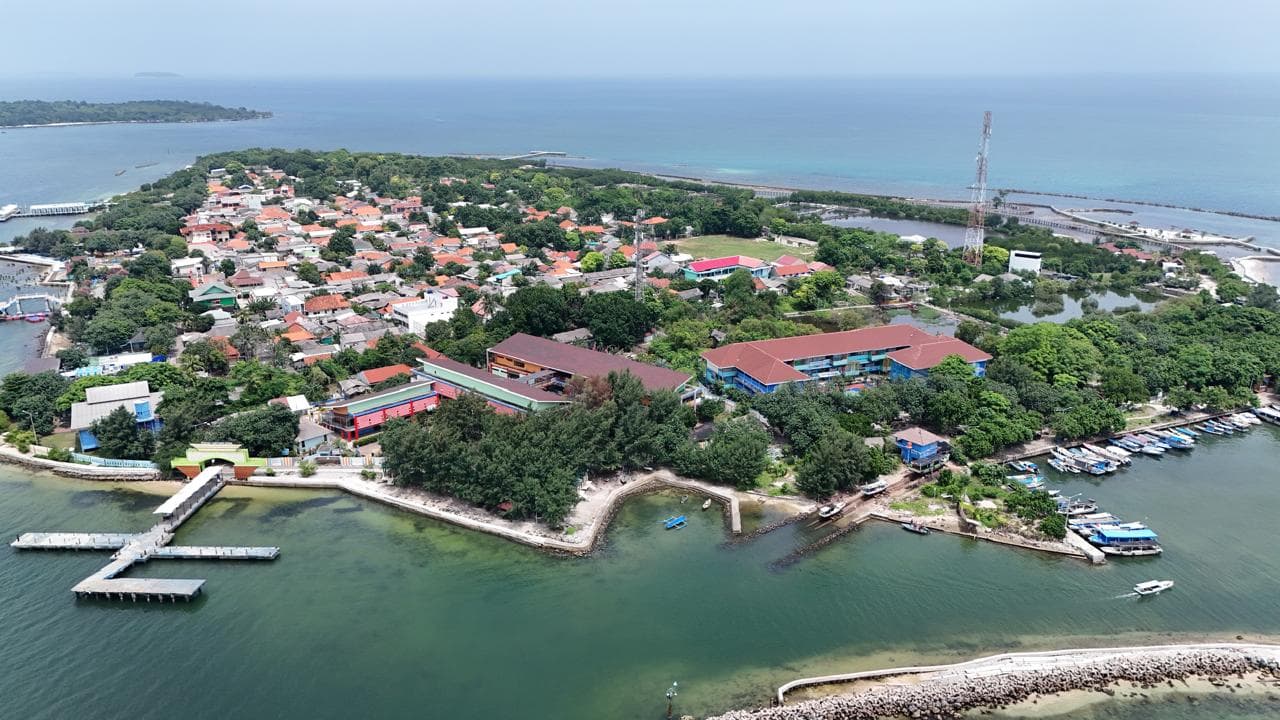
A good Thousand Islands plan begins with a named island, not a generic boat ticket. Jakarta's island regency includes inhabited communities, resort islands, archaeological sites and a marine national park, and those are not the same experience. Select the purpose of the trip, confirm the actual departure point and return arrangement with the operator, then check BMKG's current marine forecast. This guide uses planning methods instead of promising fixed sailing times, prices or sea conditions.
At a glance
Start here
- Choose one named island and understand who manages it.
- Confirm the departure pier, vessel, return and inclusions in writing.
- Check BMKG marine conditions near departure time.
- Treat national-park zones and local communities as places with rules, not a blank playground.
01
Choose the purpose before the island
Start by deciding whether you want a community stay, a managed resort, an archaeological visit or a conservation-focused marine trip. Jakarta's tourism page names islands with different roles, while the regency is made up of multiple districts and inhabited villages. A package called Thousand Islands may therefore describe a broad sales category rather than one predictable destination. Ask for the island's full name and administrative area.
A first visit benefits from one clear objective. A heritage day around Onrust differs from a beach stay, and an inhabited island differs from a private resort. Do not assume that a photograph, activity or facility shown for one island applies to another. Once the destination is fixed, research that island's local rules, accommodation, waste arrangements and connection to any protected area.
- Name the island before comparing packages.
- Decide between community, resort, heritage and conservation priorities.
- Reject itineraries that substitute an unnamed island without consent.
02
Identify the manager and conservation status
The Thousand Islands name covers both an administrative regency and a nationally managed marine conservation area. The national park authority describes a zoned protected landscape used for conservation, research, education, tourism and recreation. That does not mean every island lies in the same zone or follows identical access rules. Ask the accommodation or operator whether the proposed activity enters the national park and which permissions or charges apply.
The park's management plan identifies coral reefs, mangroves, seagrass, hawksbill turtles and giant clams among important conservation values. Visitors do not need to become marine biologists, but they should understand the practical consequence: do not touch coral, chase wildlife, remove shells or treat restoration sites as props. Follow the ranger or site manager when a marked area is closed.
- Ask whether the route enters the marine national park.
- Request the applicable zone or site rules.
- Keep fins, anchors and hands away from coral and seagrass.
03
Confirm the complete boat plan
Get four details in writing: the exact pier, check-in point, destination island and planned return. Jakarta has several waterfront departure contexts, and an operator's city office is not necessarily the boarding pier. Ask whether transport is direct or makes stops, whether luggage has limits and what happens if the sea prevents departure or return. Do not infer a sailing schedule from an old blog post.
Also ask who operates the vessel and where safety instructions will be given. Wear the provided life jacket as directed and keep it on when the crew requires it. A polished booking page does not replace clear answers about the actual boat. If the operator changes the pier, vessel or destination, reassess the trip rather than accepting the change automatically under time pressure.
- Save the pier pin and boarding contact offline.
- Confirm outward and return legs together.
- Ask for the weather-cancellation and delay process before payment.
04
Read the current marine forecast
BMKG publishes a dedicated forecast for the waters north of the Thousand Islands, including weather, waves, wind and currents across a short forecast window. Use that official page close to departure because a monthly climate description cannot tell you the conditions for a particular crossing. The numbers shown on the research date are not promises for a future journey and should never be copied into a permanent itinerary.
Compare the forecast with the captain's decision and any port notice. A forecast that looks calm to an inexperienced passenger is not permission to overrule a professional cancellation. Weather can also affect the return while the morning departure remains possible. Keep the next commitment flexible, protect documents and medication from spray, and avoid a last island connection that leaves no recovery margin.
- Check BMKG on the evening before and again near departure.
- Look at wind, waves and warnings, not only the weather icon.
- Accept the operator's or authority's decision not to sail.
05
Plan water, power and waste before boarding
Island infrastructure varies, so ask the host what drinking water, meals, power, phone signal and waste collection are available at the named property or community. Carry refillable water capacity when the operator permits it, but do not describe tap water as drinkable without local confirmation. Pack medication, sun protection and a dry bag according to personal needs rather than assuming a shop will carry a specific item.
Avoid bringing layers of disposable packaging to a place that must move waste by boat. Take batteries and non-biodegradable personal waste back when the host requests it. Toiletries marketed as reef safe should not be treated as permission to enter coral areas immediately after application. Follow local disposal and water-use instructions, especially on small islands where freshwater and storage can be constrained.
- Ask the host what is reliably available on that island.
- Carry essential medicine in the hand luggage.
- Minimize packaging and follow the island's waste system.
06
Choose activities the site can support
Snorkeling, diving, paddling and wildlife observation may be offered, but availability and suitability depend on the exact site, operator, conditions and participant. Ask where the activity takes place, who supervises it and what equipment or qualification is required. National-park charges and permissions may apply to particular activities; check the current park service rather than relying on an inclusive-package label.
If you are not a confident swimmer or have a medical concern, disclose it to the operator and seek appropriate professional guidance. Never invent competence to keep up with a group. From a conservation perspective, the better activity is the one that avoids standing on coral, feeding wildlife, collecting marine life or entering a closed restoration area. A shore walk or community visit can be more suitable than a water activity on a given day.
- Match the activity to current conditions and real ability.
- Ask which fees, permits and equipment are included.
- Choose an alternative when the protected site cannot support the plan.
07
Make the itinerary resilient to change
A return-proof itinerary has a confirmed contact on the island, enough time before a flight or intercity journey, and a clear response to cancellation. Store the accommodation name, pier and operator number offline. Share the plan with someone not travelling. If weather or mechanical issues delay the boat, follow the operator and authority rather than arranging an improvised crossing with an unknown vessel.
On return, check that the boat reaches the pier you planned for; outward and inbound points may affect the city transfer. Keep valuables dry and count luggage before leaving the vessel. The goal is not to eliminate uncertainty, which is impossible in marine travel, but to know who makes each decision and where to obtain current information. That is more useful than any fixed claim about a perfect island day.
- Keep a buffer before any fixed onward booking.
- Store all names, contacts and map pins offline.
- Use only an operator you can identify and contact.
Useful answers
Reader questions
Are the Thousand Islands one destination?
No. The name covers many islands, inhabited communities, tourism properties, heritage sites and a marine national park. Ask for the exact island and management context before booking.
Sources: Jakarta Provincial Government; Jakarta Provincial Government; Thousand Islands Marine National Park AuthorityWhere should I check weather for a Thousand Islands trip?
Use BMKG's current marine forecast for the relevant Thousand Islands waters and follow port, captain and operator decisions. Monthly weather summaries cannot establish conditions for one crossing.
Sources: BMKGCan I book a generic island-hopping package?
Only after the seller identifies every intended island, boarding pier, vessel operator, return, activity and cancellation process. Do not assume facilities or conservation rules transfer from one island to another.
Sources: Jakarta Provincial Government; Thousand Islands Marine National Park AuthorityDo national-park rules apply everywhere?
The administrative regency and marine national park overlap but are not identical. Ask whether your route enters the park, which zone is involved and what current permissions or charges apply.
Sources: Thousand Islands Marine National Park Authority; Directorate General of Natural Resources and Ecosystem ConservationRead the evidence
Sources and further reading
These sources support the relevant sections above. Plans and comparisons are editorial suggestions. Check operators for current arrangements.
- Wisata Kepulauan Seribu ↗Jakarta Provincial Government · Accessed 14 September 2026
The range of islands, villages, heritage and tourism contexts within the Thousand Islands.
- Kepulauan Seribu ↗Jakarta Provincial Government · Accessed 14 September 2026
Administrative context, inhabited islands and distinction between the regency and national conservation area.
- Taman Nasional Laut Kepulauan Seribu ↗Thousand Islands Marine National Park Authority · Accessed 14 September 2026
Official park identity, zoning, visitor services, permits and nature-tourism context.
- Rencana Pengelolaan Jangka Panjang (RPJP) Taman Nasional Kepulauan Seribu ↗Thousand Islands Marine National Park Authority · Accessed 14 September 2026
Protected ecological values, management goals, zoning concerns and tourism pressures.
- Kawasan Konservasi ↗Directorate General of Natural Resources and Ecosystem Conservation · Accessed 14 September 2026
National-park definition, zoned management and permitted conservation-compatible uses.
- Prakiraan Cuaca Perairan Kep. Seribu Bagian Utara ↗BMKG · Accessed 14 September 2026
The live short-range marine forecast format covering weather, waves, wind and currents.