
Day one morning: Merdeka Square in context
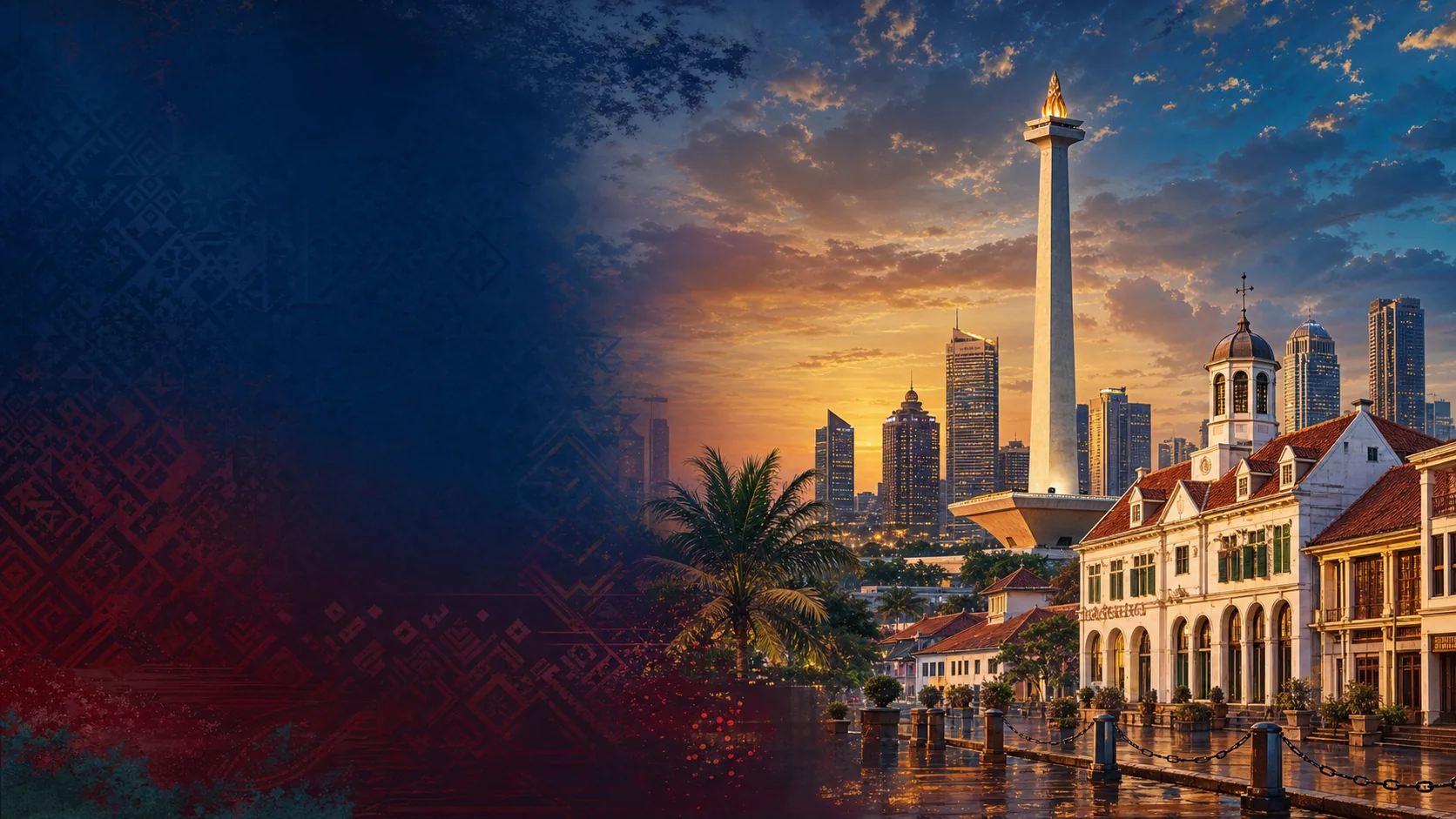
Begin around Merdeka Square with Monas and the National Museum, choosing the monument interior only when its official access fits the day.
Monas stands at the centre of an enormous civic landscape, so the walk from an entrance gate to the monument is part of the visit. Check Jakarta's official landmark information for current access and crowd arrangements. The square is exposed to sun and sudden rain; carry water, sun protection and a compact umbrella rather than depending on shade.
The National Museum of Indonesia provides the deeper introduction to the archipelago through archaeology, sculpture, ceramics and ethnographic collections. Review its current galleries before arrival because exhibitions and available wings can change. Give selected themes close attention instead of trying to photograph every case before lunch.
- Use the museum's own visitor information.
- Enter Merdeka Square through a recognised public gate.
- Protect electronics from an abrupt downpour.
Day one afternoon: two neighbouring faiths
Visit Istiqlal Mosque and Jakarta Cathedral as functioning religious institutions, following each community's schedule and visitor procedure.
Istiqlal is Indonesia's national mosque and has an official website for institutional information. Dress modestly, use the designated visitor entrance and accept that prayer or religious activity may limit sightseeing. A guided visitor route should never be left simply to obtain a different camera angle.
Jakarta Cathedral faces the mosque across the road, creating a meaningful urban relationship without making the buildings interchangeable. Check the cathedral's local notices before entering, keep voices low and pause tourism during services. Finish the day nearby instead of crossing to South Jakarta during the evening rush.
- Carry clothing suitable for both sacred spaces.
- Put the phone away during worship.
- Ask staff where visitors should wait between openings.
Day two morning: Kota Tua and colonial-era trade
Use Fatahillah Square as the anchor for Kota Tua, then choose one museum that explains Jakarta's port, commerce or civic history.
Kota Tua preserves streets and buildings associated with Batavia, but the district is also a working public area with vendors, commuters and ongoing conservation. Arrive before the strongest heat, examine the square's spatial layout and avoid reducing difficult colonial history to colourful bicycle photographs.
Museum Bank Indonesia occupies a former banking building and uses its official galleries to explain monetary and economic history. Confirm its entry process directly with Bank Indonesia. Pairing it with another major Kota Tua museum is possible only if both subjects genuinely interest you; otherwise spend longer reading one collection.
- Check Museum Bank Indonesia's official page.
- Keep active doorways and cycle paths clear.
- Use a licensed guide for detailed colonial history.
Day two afternoon: Glodok and Petak Sembilan
Walk from the old-city area into Glodok for Chinese-Indonesian religious, commercial and food history, with consent-led photography.
Glodok's lanes contain temples, markets, medicine shops and food businesses shaped by generations of Chinese-Indonesian life. Temples are not decorative interiors: observe incense and prayer from permitted areas, avoid touching offerings and lower the camera whenever ceremonies are taking place.
Food exploration works best through a few established stalls or a reputable local guide who can explain ingredients. Ask vendors before filming preparation at close range. Rain can quickly collect along crowded lanes, so use sturdy footwear and move to safe cover rather than blocking a shopfront.
- Ask about pork, shellfish or allergens explicitly.
- Never reposition offerings for a picture.
- Keep cash and valuables discreet in dense markets.
Day three: choose one large-scale Jakarta experience
Select Taman Mini for regional culture, Ragunan for a family nature day, or the Thousand Islands for marine time; do not combine them.
Taman Mini Indonesia Indah uses regional pavilions, museums and performance spaces to introduce the country's diversity across extensive grounds. Study the official Jakarta tourism guide and select several provinces or themes before arrival. The site is too broad for an unplanned loop around every pavilion.
Ragunan Zoo requires its own official access and conservation guidance, while the Thousand Islands involve port transfers, sea conditions and an established boat operator. Choose the islands only with a confirmed destination and return. For a shorter finale, ride MRT Jakarta to South Jakarta and explore around one station rather than inventing another expedition.
- Make one third-day choice before booking transport.
- Use Ragunan's official visitor channel.
- Verify island boat and weather arrangements independently.